Joel Pritchard’s Principled Pragmatism
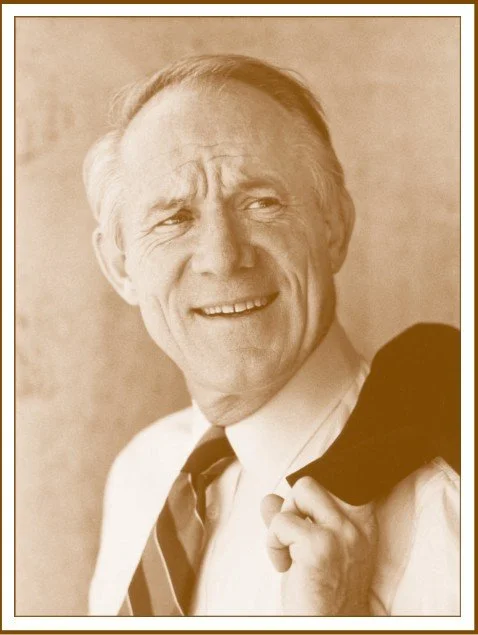
Photo from “Joel M. Pritchard - An Oral History”
Three decades after his passing, Joel Pritchard’s principled pragmatism is still coursing through the veins of his beloved State Legislature.
Over a span of forty-some years, Joel Pritchard ascended the legislative ladder, first as a State Representative, then a State Senator, then a U.S. Representative, and finally as Lieutenant Governor.
Legislators eventually came to consider him their Village Elder. And his wise mentorship imprinted indelibly on all who experienced it.
I experienced it long ago as a young Congressional Intern. Raised in a staunchly Democrat Irish Catholic home, I knew two things to be true: Democrats are right and Republicans are wrong. But Joel, a life-long Republican, set me straight. He taught me that listening was a legislator’s most valuable skill.
“It’s a puzzle, not a debate,” he’d say. “The point is to solve the puzzle. But you can’t solve it until you first have all the pieces. We hold half the pieces. And those folks across the aisle hold the other half. We are right about our pieces and they are right about theirs. But being half-right does not solve the puzzle. Only when we lay all the pieces out and then work together to connect them can the puzzle then be solved.”
Case in point, in early October of that year, Joel got wind that the then-Governor planned to start ushering oil-laden supertankers into the pristine waters of Puget Sound. This alarmed him, as he believed legislators are Stewards of the State’s resources, which are entrusted to their care. So, he rallied the State’s mostly Democratic Congressional Delegation and, in the space of just 48 hours, they got Congress to pass a law banning supertankers from Puget Sound.
Joel’s belief that the State’s resources are entrusted to the care and stewardship of its legislators still reverberates in our State Capitol. I say this because I have seen it. I have, for the past thirty years, taken an active interest in our Legislature’s efforts to preserve the State’s existing inventory of relatively affordable housing: Condominium homes and homes in planned unit developments.
That inventory owes its existence to Byron Hanke, the Founding Father of affordable housing. Byron, like others, was inspired by President Kennedy’s 1961 Inaugural Address. Upon reflection, he decided that what he “could do for my country” was to solve its then-emerging affordable housing crisis.
His solution was to invent what I think of as the shared-asset housing model, in the form of planned unit developments and condominiums. This model placed private playgrounds, shared amenities, common areas, and even some building exteriors into the co-ownership of homeowners who shared the use of these resources.
Because such common areas and amenities would require long term care, this housing model, of necessity, required the creation of homeowners’ associations to which these caretaking tasks would be entrusted.
This innovative housing model held great promise to lower home prices and thus gradually generate a robust inventory of affordable housing. But this creative solution quickly hit a stumbling block: Owners could not quite work out how to operate these homeowners’ associations they had been saddled with running.
To remove this obstacle, lawyers developed a model statute that spelled out how association elections, decisions, funding, and the like, should be handled. The model statute embodied an association operating system of sorts, one that would enable owners to cost-effectively operate their associations, and thus provide for the long term care of their shared assets.
As legislatures across the country enacted slightly varied versions of this model statute, the floodgates finally opened and the shared-asset housing model began producing what has, over time, become our nation’s core inventory of affordable housing.
But, just as this model entrusted the long-term care of common areas to associations, this model also entrusted the long-term care of these statutory association operating systems to the legislatures that had enacted them.
Regrettably, the quality of stewardship which legislatures have provided varies widely from one state to the next.
Colorado’s legislature, for example, seems to function like a vending machine. A losing litigant can seemingly turn to its state legislature, push a button, and get the association statute changed in exactly the way required to give the loser what a court had already ruled he was not legally entitled to get.
And Florida’s legislature seems to view its association statutes as a statutory form of the dreaded “Honey Do” list, a list that seems to grow exponentially. Each legislative session, condominium owners brace themselves for the inevitable additional burdens that the next round of new legislation will require associations to perform and require association members to fund.
The cumulative impact of these death-by-a-thousand-cuts changes to their association statutes is that operating an association in compliance with those statutes is fast becoming cost prohibitive. And reports out of Florida suggest that its condominium market is on the brink of collapsing.
In stark contrast to other state legislatures, Washington State’s stewardship of these mission critical association statutes has - to date - been qualitatively better.
And, to my eye, its approach mirrors the approach that Joel Pritchard mentored legislators to take in preserving State resources entrusted to their care.
First, be crystal clear on the outcome you intend to create. Here, for example, the goal is to preserve our State’s existing affordable housing inventory. And that housing is at risk if its statutory operating system makes association operations cost prohibitive.
Therefore, the statutory operating system should not be changed, absent compelling proof that a change is mission critical, and then only if the proposed change both remedies the problem and does so with minimal risk of unintended consequences.
This Legislative litmus test is not carved in marble on the walls of the rotunda. And yet its use is implicit in the legislative history of all significant association legislation enacted over the past 35 years.
Still, each new legislative session arrives with the certainty that our Legislature’s stewardship of these statutory association operating systems will, once more, be put to the test. While each past legislative session has concluded with the relief that comes from seeing that our Legislature has, once more, successfully navigated through the countless attempts by losing litigants and by to-do-list aficionados to bend these statutes to their liking, this stewardship challenge is never ending.
Because the continued viability of the housing models that are responsible for the lion’s share of Washington’s existing affordable housing still hangs in the balance, I remain hopeful that Joel Pritchard’s principled pragmatism will, yet again, win out as our Legislature navigates the challenges it will face in this current legislative session.